Hot Waffles

Cringe

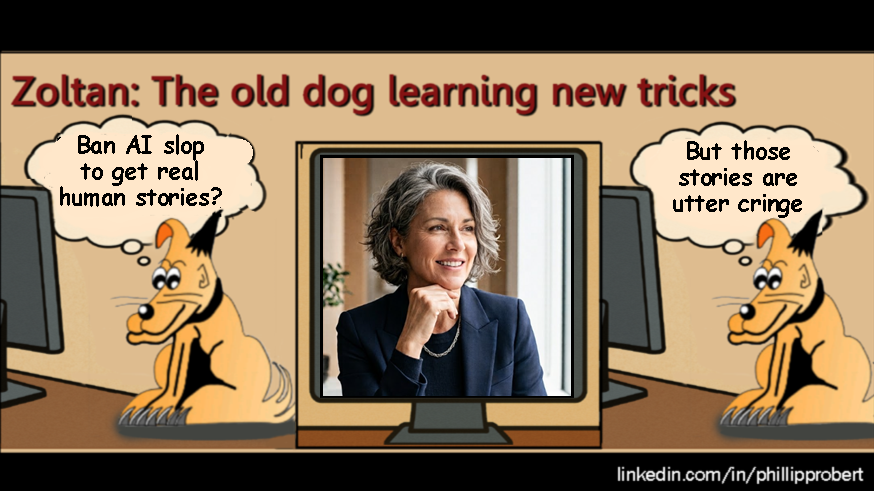
We have spent the last few years waging a collective war on machine-generated text. We bemoan the robotic syntax, the predictable structural transitions, and the bloodless summaries that clutter our professional feeds.

So aggressive has the pushback been that social networks have even introduced explicit reporting mechanisms to flag automated clutter.

The underlying thesis is noble: if we could just filter out the synthetic noise, the rich, authentic hum of human wisdom would shine through.

Except that is not quite what happened.

What we get now is variations on the following;

Start with a vulnerable admission (“I cringe posting this,” “I don’t know if I should share this,” “Today I received a photo…”)

Insert a personal story that sounds profound (the desert in Qatar, having purple hair, turning 40 trauma, a corporate pivot, making a bed)

Pivot to a “lesson learned” – usually something obvious dressed up as a revelation.

Add a numbered list (because LinkedIn demands lists)

And of course add a photo that is supposed to be ‘of the moment’, but really a high-production, soft-focus portrait accompanying the deeply dramatic essay.

End with a call to action/question to drive engagement (“What’s that for you? Share it. Go on. Dare ya!”)

Optional: include a joke to seem relatable

Sure, these posts that we see ‘suggested’ every day may not be AI slop, but they are far worse – Cringe

Recalculating

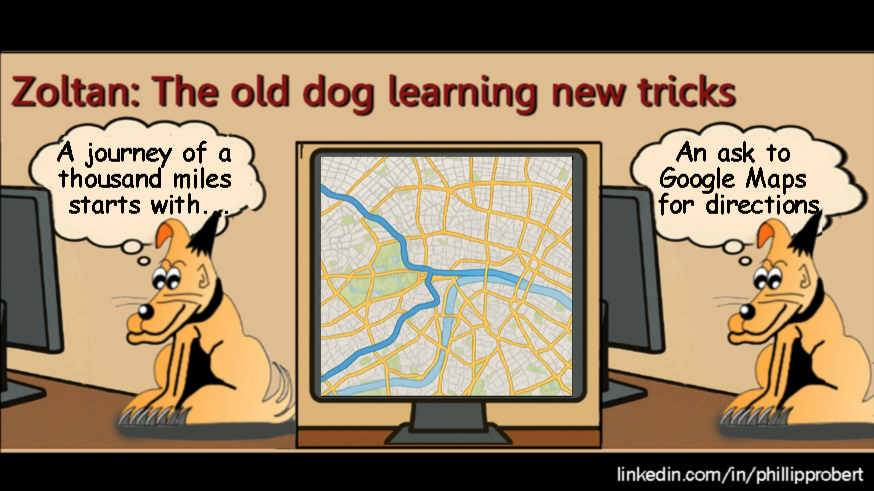
Recalculating: How convenience, algorithms, and the monetisation of everything are steering us off course

A quick heads-up before you read:

On the surface, this post covers a HGV stuck in a narrow country lane, the decline of local journalism, the visual noise of late 1990s web design, how the LinkedIn feeds operate, and why AI platforms are starting to look like modern ad space.

They might sound completely unrelated. But if you follow the thread to the end, they are all symptoms of the exact same digital shift, and it affects how every one of us works, thinks, and navigates decisions today.

Here’s how it all connects…

Full essay here

I bet he’s thinking

She: “I bet he’s thinking about other women.”
Him: “Is Article 50 of the EU AI Act just going to become the new ‘Accept All
Cookies’ banner?”

Think about it.

Back in 2018, regulators promised that GDPR cookie pop-ups would give us total control over our personal data. Instead, they created a universal, brain-dead click tax.

Millions of us tap “Accept All” fifty times a day without reading a single syllable, just to clear the obstruction and get to the content.

Now, Article 50 of the EU AI Act arrives with the exact same solemn promises: mandatory machine-readable watermarks, synthetic content tags, and provenance disclosures.

We already know how this ends. It’s heading straight for total banner-fatigue.
In a year’s time, every article, video, and post will carry a micro-label saying “This content is 14% machine-assisted.”

And readers will ignore it completely, just like they ignore cookie notices, because they don’t care about the compliance metadata.

They care whether the content is useful, funny, or real.

Mainly because its a…

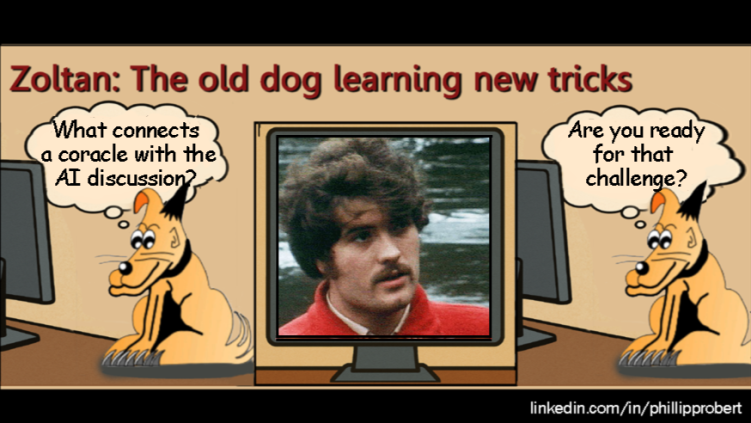
His name is Geraint Pillock, and for some, he is the greatest Welshman who ever lived. That puts him in stiff competition with Tom Jones, Gareth Edwards, and Rob Brydon, but Geraint holds his ground.

Never heard of him? Now’s your chance.

Geraint Pillock was a cult-favourite comedic character created by John Sparkes for the classic HTV Wales sketch show Barry Welsh is Coming.

He was an eccentric, stone-faced coracle enthusiast best known for answering every news reporter’s question with his legendary catchphrase:

“Mainly because it’s a challenge for me, a challenge for the coracle, and a personal challenge for me.”

Which brings us, naturally, to AI watermarking.

AI and the Hudson

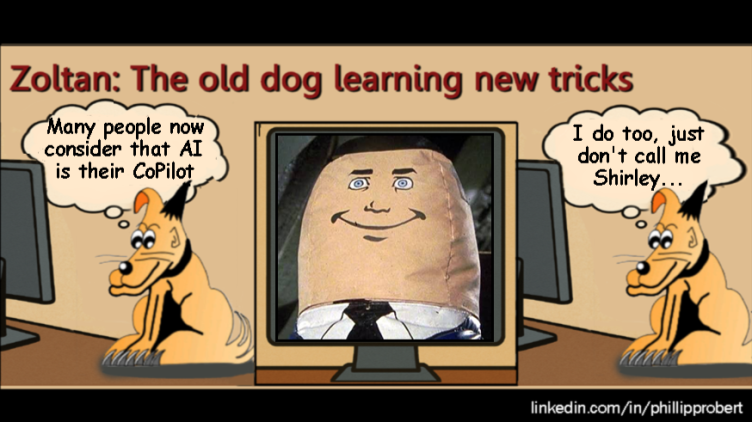
“AI is your co-pilot” – or so the corporate slogan goes.
But what happens when your co-pilot starts quietly hallucinating the flight plan, making up data, and steering you off course?

We are treating AI like a reliable team member, but our professional relationship with it is following a troublingly human lifecycle, moving from initial infatuation straight into frustration and doubt.

Here is why treating AI as a “co-worker” works right up until it doesn’t, and what it actually takes to keep control of the flight deck…

More on this here

Hot Waffles

Hot Waffles is the on-going story.

It is:
What’s happened.
What I want to happen.
What I believe has happened.
What I would have like to have happened.
What I want others to believe, I believed happened
None of the characters, locations and events are even realistic.
It is:
A science fiction story about,
Newspapers, Television, Websites
and the quest to get a decent job.

The rest is just my ramblings, mumblings or rants.

I started writing Hot Waffles in 1984 and was published as an A5 printed Fanzine. Issue one contained a couple of anecdote stories, illustrations and a Zoltan cartoon.

It was, by any measurable standards – awful.


Over 35 issues later ending in 1997, I like to think it got better as it followed my life from first steps into newspapers in Newcastle and Cardiff.

Around 1999, my stories became digital and the adventures continued.

2009 and Twitter was the primary outlet for my expressions; for myself, for Barry, Hugh, Zoltan and eventually Siadwel   

Then in 2025 an unexpected pivot in my life and I found myself writing for LinkedIn. Clearly not the deeply personal (Only to be shared with close friends) type of material, but essays that were written to ‘raise’ my profile in accordance to the gospel of trying to get a new job.

300+ posts later and some of those essays are borderline Waffles, 80+ Zoltan essays and formal case studies that are parked on my portfolio website – Probertnet.com

Powered by WordPress & Theme by Anders Norén